David Franke · 9 September 2026
How High-Altitude Conditions Shape Hair Product Formulations Used in Resort Communities
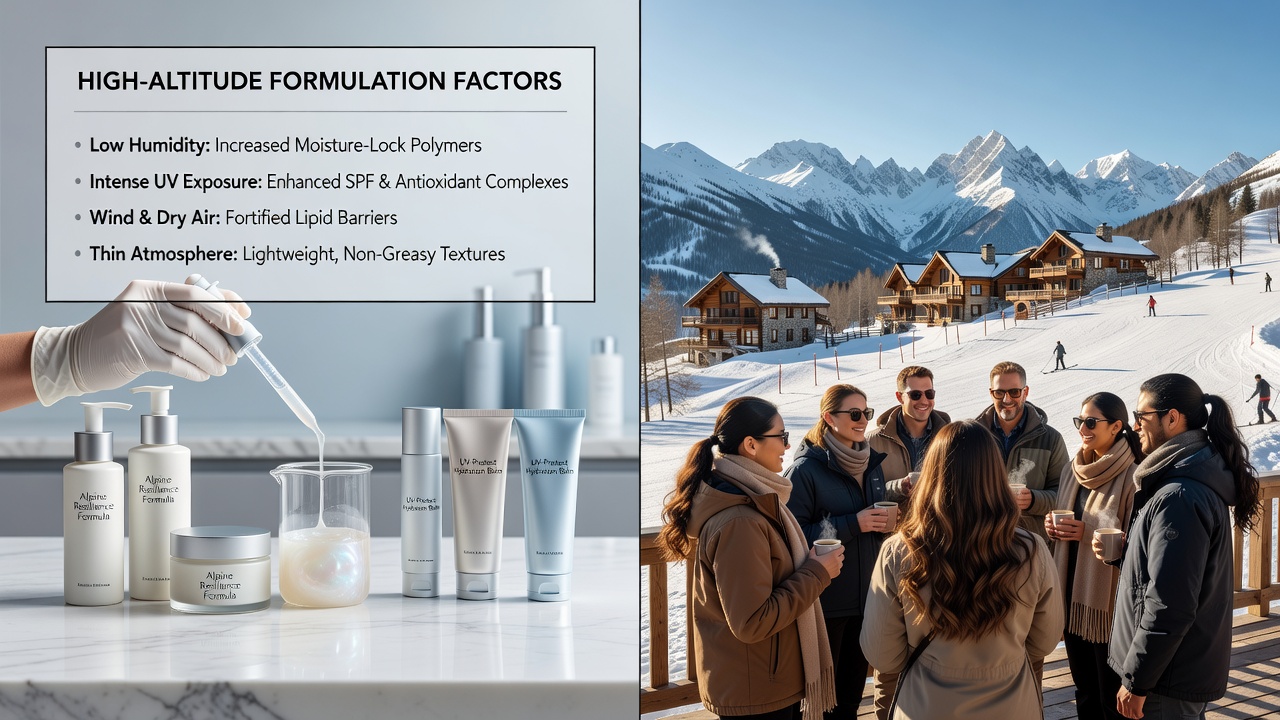
High-altitude resort communities experience atmospheric conditions that directly influence the development of hair care products, with lower air pressure, reduced humidity levels, and increased ultraviolet radiation creating specific challenges for hair maintenance. These environments, found in locations such as the Rocky Mountains and the Alps, prompt manufacturers to adjust ingredient ratios and preservative systems to address accelerated moisture loss and cuticle damage. Data from environmental monitoring stations indicate that humidity often drops below 30 percent at elevations above 2,000 meters, which accelerates evaporation from hair shafts compared to sea-level conditions.
Atmospheric Factors Affecting Hair Structure
Lower oxygen availability and pressure changes at altitude alter how hair absorbs and retains moisture, while intense solar exposure breaks down proteins in the cortex more rapidly than at lower elevations. Researchers have measured ultraviolet index values exceeding 11 in many resort areas during peak seasons, leading formulators to incorporate higher concentrations of UV-absorbing compounds such as benzophenone derivatives. Studies conducted by institutions in Canada show that hair samples exposed to these conditions lose up to 25 percent more tensile strength within 48 hours without protective additives.
Resort communities also contend with sharp temperature swings between day and night, which cause repeated expansion and contraction of the hair shaft. This thermal cycling prompts the inclusion of film-forming polymers that maintain flexibility without becoming brittle. Product developers adjust emulsion stability because the lower boiling point of water at altitude affects how creams and serums spread and absorb during application.
Formulation Adjustments for Moisture Retention
Manufacturers increase humectant levels, including glycerin and hyaluronic acid derivatives, to counteract the dry air that strips natural oils from the scalp and strands. Silicone-based sealants appear in higher percentages to create barriers against evaporation, while protein hydrolysates from wheat or silk help repair damage from UV exposure. These modifications emerge from iterative testing in climate-controlled chambers that replicate mountain conditions before products reach resort retailers.
Preservative systems receive special attention because reduced atmospheric pressure can alter the efficacy of certain antimicrobial agents. Formulators often switch to broader-spectrum options approved by regulatory bodies such as Health Canada and the European Chemicals Agency to ensure product safety across varying elevations. Packaging also evolves, with pump mechanisms calibrated for lower pressure to prevent leakage during transport to high-altitude destinations.
Regional Examples and Industry Practices
Salons in Aspen and Whistler report stocking lines that feature added ceramides and panthenol to address the specific brittleness observed in clients who spend extended periods outdoors. These products undergo stability testing that accounts for both cold nights and midday sun exposure common in September, when many resorts transition between summer and winter visitor patterns. In September 2026, several European resorts plan coordinated product launches timed with updated solar radiation forecasts from meteorological services.
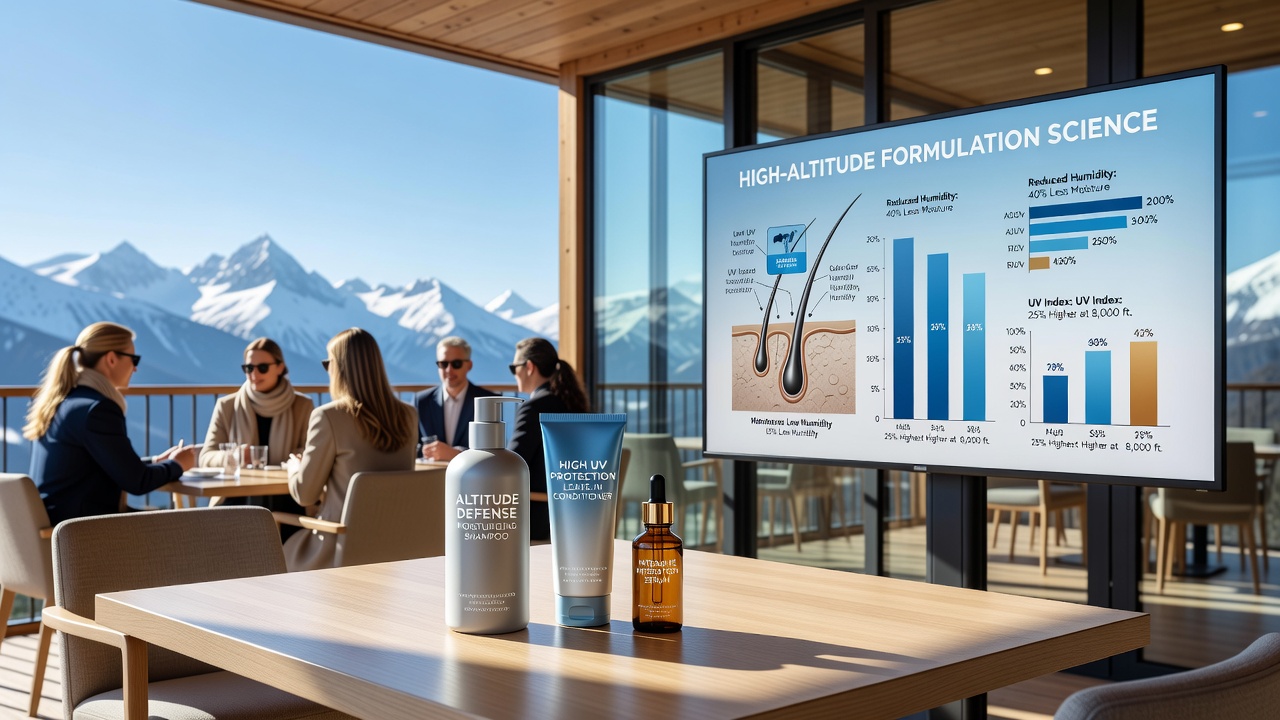
Trade data from the Personal Care Products Council indicate that sales of altitude-specific conditioners have risen steadily in mountain resort regions over the past decade. Companies source ingredients from suppliers who certify performance under reduced pressure, ensuring that leave-in treatments maintain efficacy when applied at 3,000 meters or higher. Observers note that these specialized lines often carry distinct labeling to inform consumers about the environmental adaptations built into each formula.
Testing and Regulatory Considerations
Independent laboratories simulate high-altitude conditions using vacuum chambers and UV lamps calibrated to local solar spectra. Results guide decisions on antioxidant inclusion, such as vitamin E derivatives that neutralize free radicals generated by intense sunlight. Regulatory frameworks in Australia and New Zealand require additional documentation for products marketed in high-UV zones, influencing how global brands standardize their resort-community offerings.
Supply chains adapt as well, with distributors maintaining temperature-controlled storage to preserve ingredient integrity before products reach final retail locations. This logistical attention ensures that the performance characteristics developed in controlled settings translate reliably once products arrive at elevation.
Conclusion
High-altitude conditions drive measurable changes in hair product composition, from elevated humectant and UV-filter content to modified preservative and packaging systems. Data collected across multiple resort regions demonstrate consistent patterns of ingredient adaptation that address the combined effects of dryness, radiation, and pressure. These developments reflect ongoing collaboration between formulators, environmental researchers, and local service providers who respond to the documented needs of hair exposed to mountain environments.