David Franke · 9 September 2026
Seasonal Client Migration Patterns and Retention Tactics in Remote Mountain Beauty Services
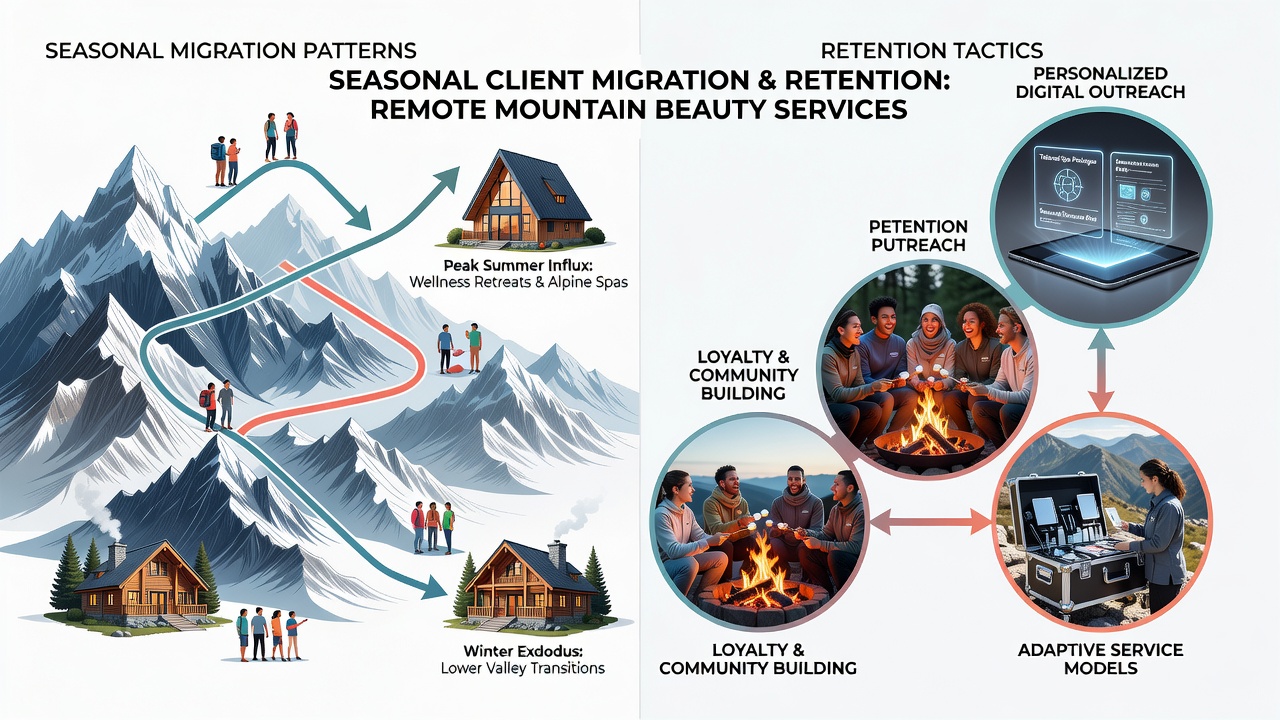
Remote mountain beauty services operate in locations where client volumes fluctuate sharply with the seasons, and data from tourism authorities show consistent patterns tied to recreational peaks. Winter months draw skiers and snowboarders to resorts in the Rockies and Alps, while summer brings hikers and cyclists to the same areas. These movements create predictable surges followed by lulls that operators track through booking records and local visitor statistics.
Winter Influx and Summer Shifts
Beauty salons and spas in high-altitude communities record their highest appointment rates from December through March when snow sports attract visitors from urban centers. Figures from the National Ski Areas Association indicate that ski resort visits in the United States exceeded 60 million in recent seasons, and many participants schedule grooming and skincare services before and after outdoor activity. By contrast, April through June and October through November represent shoulder periods with reduced traffic, although September 2026 data from mountain tourism boards suggest a modest uptick in early fall wellness bookings as travelers seek post-summer recovery treatments.
Client origins also change with the calendar. Winter guests often arrive from coastal cities in North America and Europe, whereas summer visitors include more families from inland regions. Observers note that these groups request different service mixes, with winter clients favoring intensive hydration treatments and summer clients preferring sun-damage repair protocols.
Factors Driving Migration
Weather conditions, school calendars, and airline pricing all influence arrival timing. Researchers at the University of Innsbruck have documented how early snowfalls accelerate bookings by as much as three weeks compared with low-snow years. Road access and resort opening dates further shape demand, because closures on major mountain passes immediately reduce foot traffic to nearby salons.
Economic variables add another layer. Currency fluctuations between the United States and Canada affect cross-border travel, and Statistics Canada reports show that a stronger Canadian dollar correlates with fewer American clients at British Columbia mountain spas during certain winters. Operators monitor these indicators to adjust staffing weeks in advance.
Retention Tactics Employed by Operators
Many facilities use advance-booking incentives tied to specific seasons. Prepaid packages for winter visitors that include follow-up summer appointments help maintain contact across the calendar gap. Email sequences sent during shoulder months remind past clients of available dates and often reference local event calendars to increase relevance.
Partnerships with lodging providers supply another channel. When resorts share guest lists under privacy-compliant agreements, salons can extend targeted offers that reference the guest's prior service history. Data from the Canadian Mountain Resorts Association indicate that such coordinated campaigns raise repeat-visit rates by measurable margins during the subsequent season.
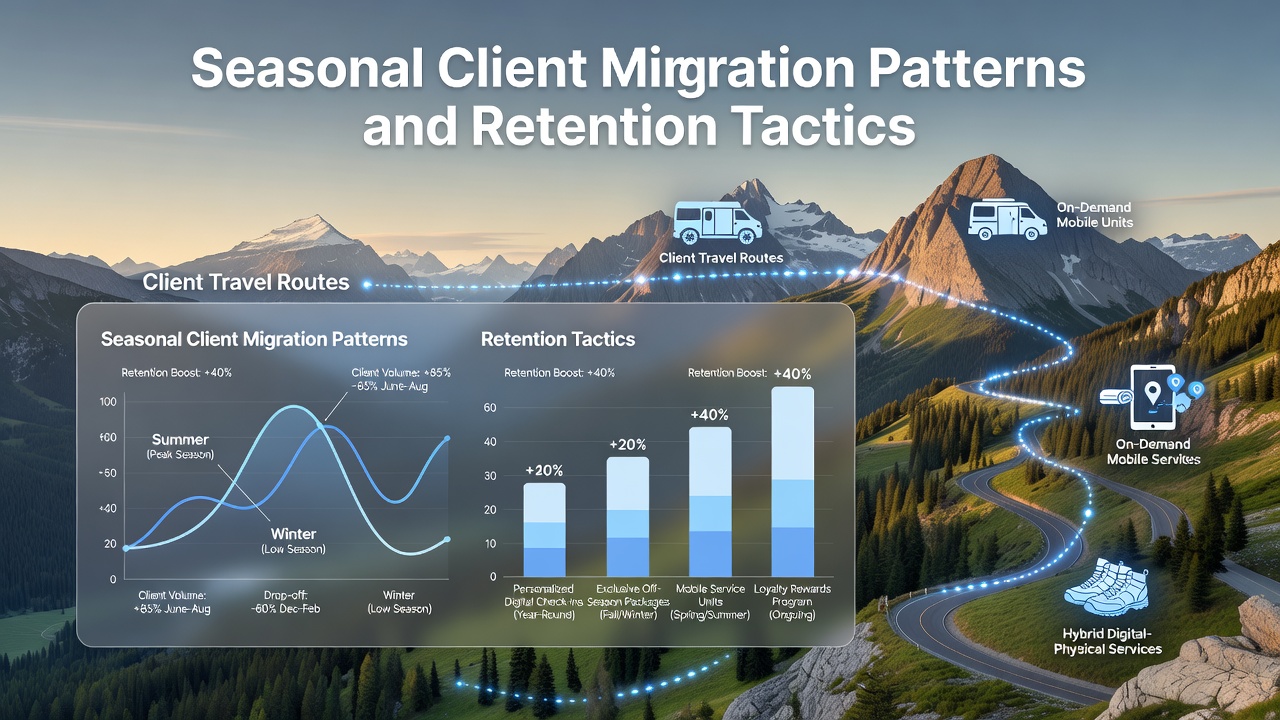
Loyalty programs that award points redeemable year-round encourage clients to return outside peak windows. Some establishments convert accumulated points into discounts on high-demand winter services, which spreads revenue more evenly across the year. Inventory management improves as well, because operators can forecast product usage based on historical seasonal demand rather than reacting to sudden drops or spikes.
Technology and Data Use
Modern booking platforms record not only appointment frequency but also service type preferences by month. Analysis of these datasets allows managers to anticipate which products will sell out and to schedule staff accordingly. In September 2026, several resort-area salons reported implementing AI-assisted scheduling tools that reduced no-show rates during shoulder periods by cross-referencing weather forecasts with historical booking patterns.
Client communication remains central. Automated reminders sent 48 hours before appointments, combined with post-service follow-up messages, maintain engagement even when clients are hundreds of miles away. Surveys distributed at the end of each season gather feedback that operators use to refine offerings before the next migration wave arrives.
Conclusion
Seasonal client migration in remote mountain beauty services follows measurable patterns driven by weather, recreation calendars, and economic signals. Retention strategies that combine advance booking incentives, resort partnerships, and data-informed scheduling help operators stabilize revenue across fluctuating periods. Continued monitoring of tourism statistics and local indicators supports adjustments that align service capacity with expected arrivals.