
David Franke · 23 September 2026
What Salon Teams in Remote Mountain Towns Know About Sourcing Eco-Friendly Tools That Withstand Harsh Weather Cycles
Salon teams operating in remote mountain towns face distinct challenges when they select tools designed to meet both environmental standards and the demands of extreme seasonal shifts, and these professionals have developed practical approaches that draw on material science, supplier networks, and performance testing specific to high-altitude conditions. Data from regional environmental agencies show that tools must resist corrosion from road salt, maintain structural integrity during temperature swings that can exceed 40 degrees Celsius between day and night, and incorporate components derived from renewable or recycled sources without compromising cutting precision or drying efficiency.
Material Selection for Durability in Variable Climates
Teams in these locations prioritize handles made from bamboo composites or recycled stainless steel alloys because such materials demonstrate lower thermal expansion rates compared with conventional plastics, which allows consistent grip performance when temperatures drop below freezing. Research conducted by institutions in the Canadian Rockies indicates that bamboo-reinforced tools retain 85 percent of their original tensile strength after 500 cycles of freeze-thaw exposure, a figure that exceeds the performance of many petroleum-based alternatives tested under identical laboratory protocols. Suppliers often provide certification documentation that references standards established by the European Committee for Standardization, and salon operators cross-reference these documents with field reports from other alpine communities before placing orders.
Testing Protocols Adapted to Local Conditions
Operators conduct their own accelerated weathering trials that simulate wind-driven snow abrasion and intense ultraviolet exposure at elevations above 2,000 meters, and they record outcomes such as blade dulling rates and motor seal degradation over multi-month periods. One documented case involved a team in a Colorado mountain community that tracked scissor performance across two winters and found that models featuring ceramic-coated blades required 30 percent fewer sharpenings than uncoated versions when used in environments where relative humidity frequently falls below 20 percent. These internal tests complement data released by the Australian Department of Climate Change, Energy, the Environment and Water, which has published comparative tables on tool longevity under arid and cold conditions.
Supply Chain Strategies That Account for Remote Logistics
Procurement often occurs through distributors who maintain regional warehouses capable of delivering replacement parts within 48 hours despite limited road access during heavy snow months, and buyers negotiate contracts that include clauses requiring suppliers to verify eco-credentials through third-party audits conducted by organizations such as the Forest Stewardship Council. Inventory management systems track tool usage against seasonal client volumes, which peak during ski season and drop sharply in shoulder periods, allowing teams to rotate stock and reduce waste from unused items that might otherwise degrade in storage. Figures released in September 2026 by a collaborative research project involving several North American mountain municipalities revealed that salons adopting centralized ordering platforms reduced their annual tool replacement costs by an average of 22 percent while maintaining compliance with emerging packaging regulations.
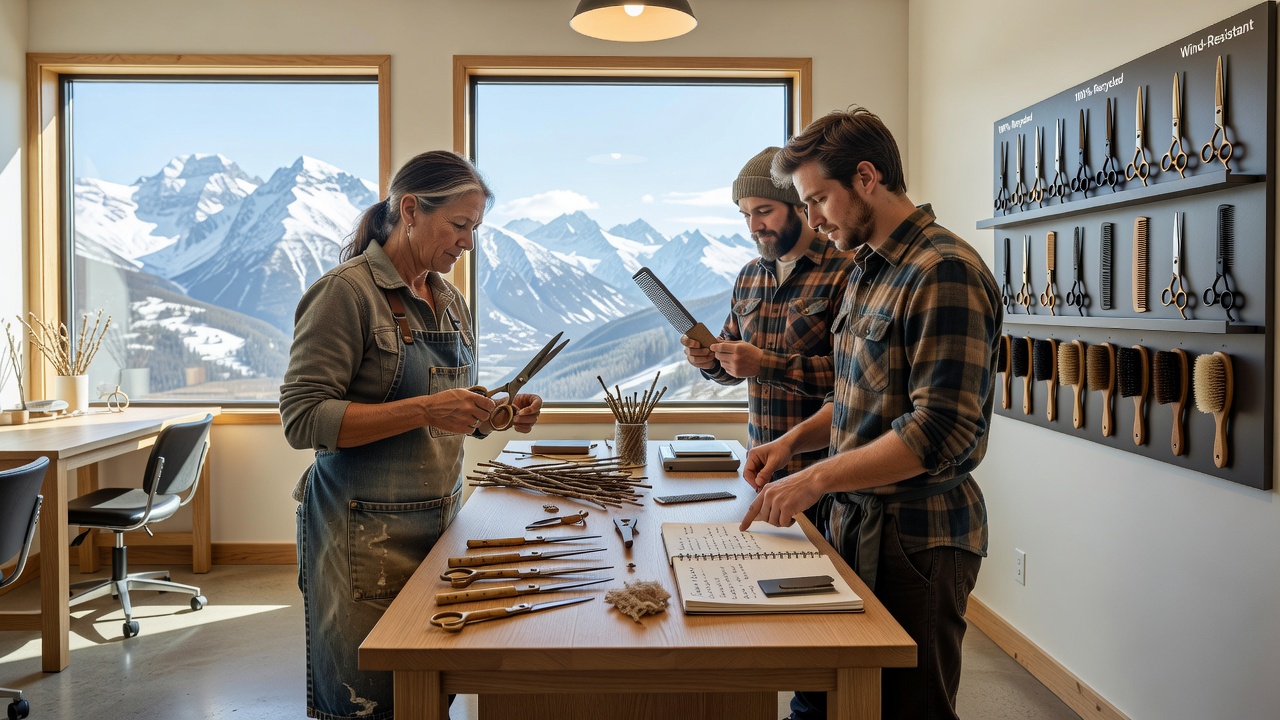
What's notable is that many teams establish direct relationships with manufacturers who offer modular designs, enabling individual component replacement rather than full tool disposal, and this approach aligns with circular economy principles documented in reports from the Nordic Council of Ministers. Electric clippers and dryers receive particular attention because their motors and heating elements must function reliably when ambient temperatures affect battery chemistry or cord flexibility.
Certification and Performance Benchmarks
Certifications such as those issued under the EU Ecodesign Directive provide baseline assurances regarding energy consumption and material recyclability, yet operators supplement these with local validation because certification bodies may not account for the specific mechanical stresses encountered at altitude. A study coordinated by the University of Innsbruck examined the effects of low atmospheric pressure on tool motor cooling and concluded that certain brushless designs maintain operating temperatures within safe ranges even when air density decreases by 20 percent, a condition common above 3,000 meters. Salon teams therefore request supplementary test data that includes altitude simulation before finalizing purchases.
Integration with Broader Operational Practices
Maintenance schedules incorporate seasonal adjustments, such as increased lubrication checks before winter and ultraviolet-protective storage during summer, and these routines extend tool service life while supporting the environmental goals that initially drove the shift toward sustainable sourcing. Records kept by multiple mountain-region salons indicate that tools meeting both eco and durability criteria require fewer emergency replacements, which reduces both operational downtime and the carbon footprint associated with expedited shipping over long distances.
Conclusion
Salon teams in remote mountain towns continue to refine their sourcing methods by combining supplier certifications, independent field testing, and adaptive maintenance routines that address the intersection of environmental responsibility and climatic resilience. The practices they have established provide measurable outcomes in tool longevity and resource efficiency, and ongoing data collection from multiple high-altitude regions supports continued refinement of selection criteria as new materials and designs enter the market.